Pueblo Architecture in Art
/New Mexico is known for many things—the rugged landscapes, the culture, the food, and of course, the architecture. “Santa Fe style” has defined the look of the City Different for over a century, a unique architectural style blending Pueblo, Spanish Colonial, and territorial-era influences. It’s also one of the most recognizable hallmarks of Southwestern art.
Explore works that feature this signature aspect of the New Mexican lifestyle and landscape, available at the gallery.
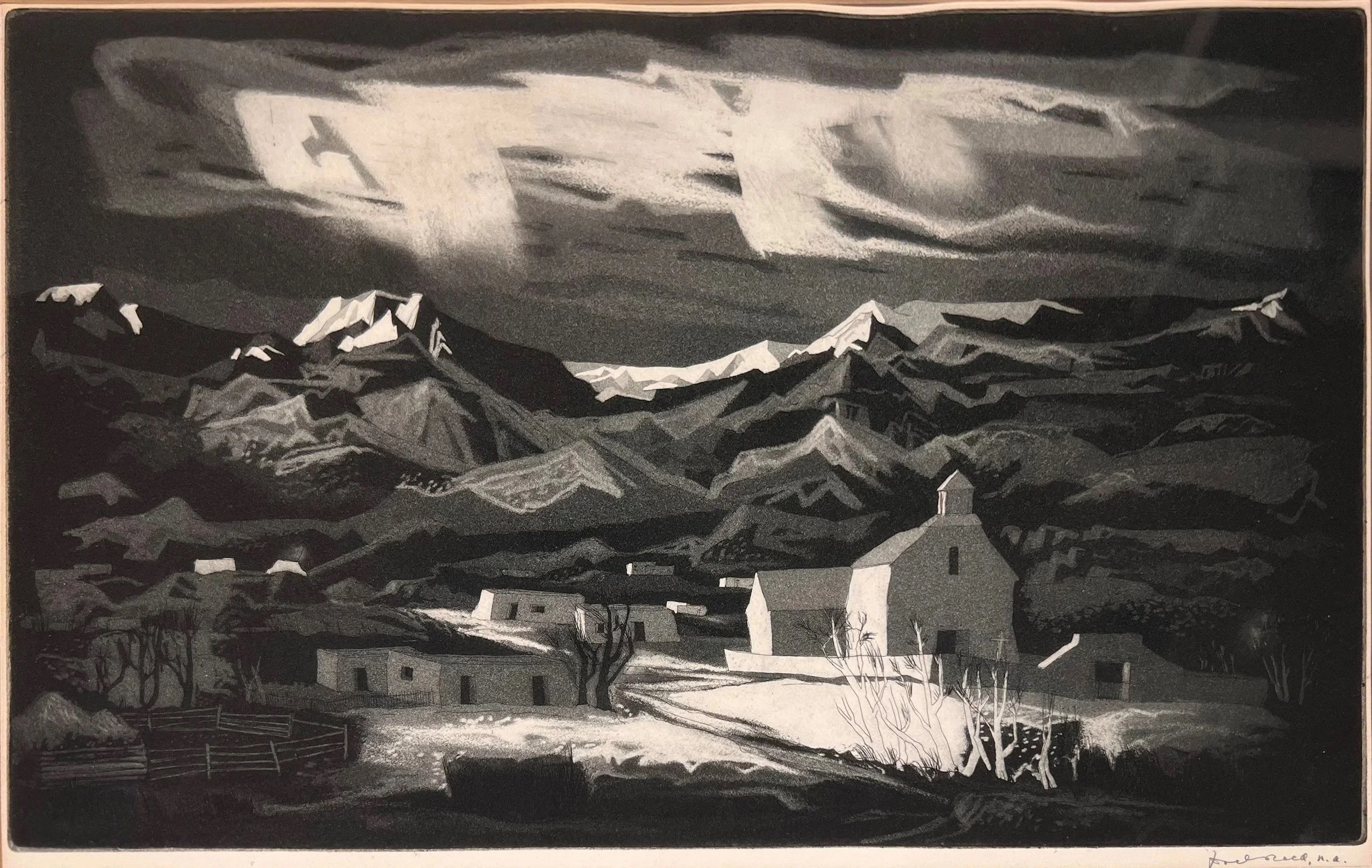
Doel Reed - Picuris Pueblo Winter, aquatint/paper, 10 ¼ x 16 in.
Doel Reed was a pioneer of printmaking, particularly aquatint. He spent much of his career as a beloved professor at Oklahoma State University, where he made printmaking a staple. After years as an instructor and working artist, Reed retired in Taos, where his house remains open to OSU students for art fellowships.
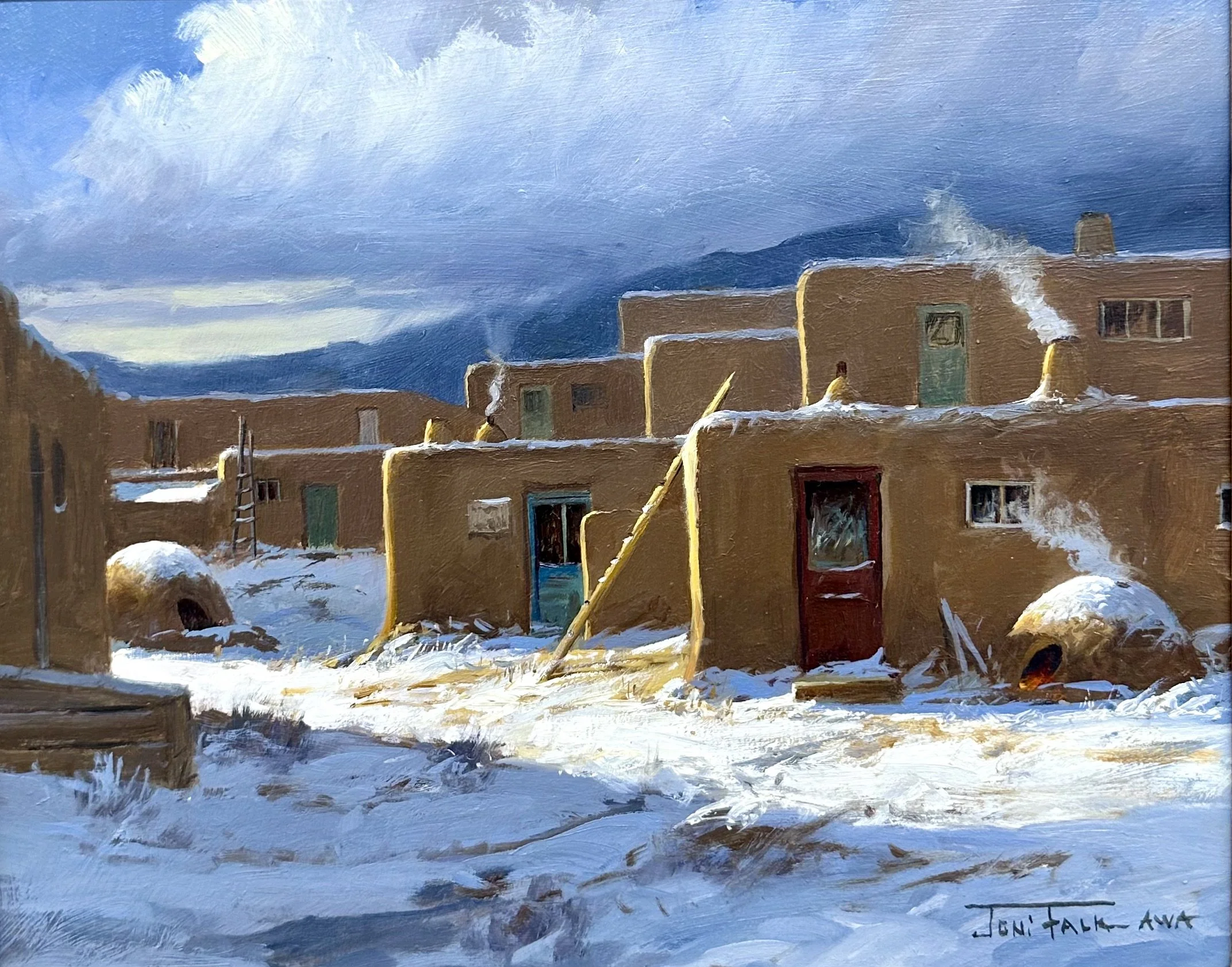
Joni Falk - Daybreak at Taos Pueblo, oil on board, 8 ¾ x 10 in.
Taos Pueblo is often the subject of Southwestern works, but it seems to glow in this snowy scene by Joni Falk. A ray of light breaks through the overcast sky, illuminating the sides of the adobe building in this breathtaking landscape, which displays why this architecture offers so much inspiration.
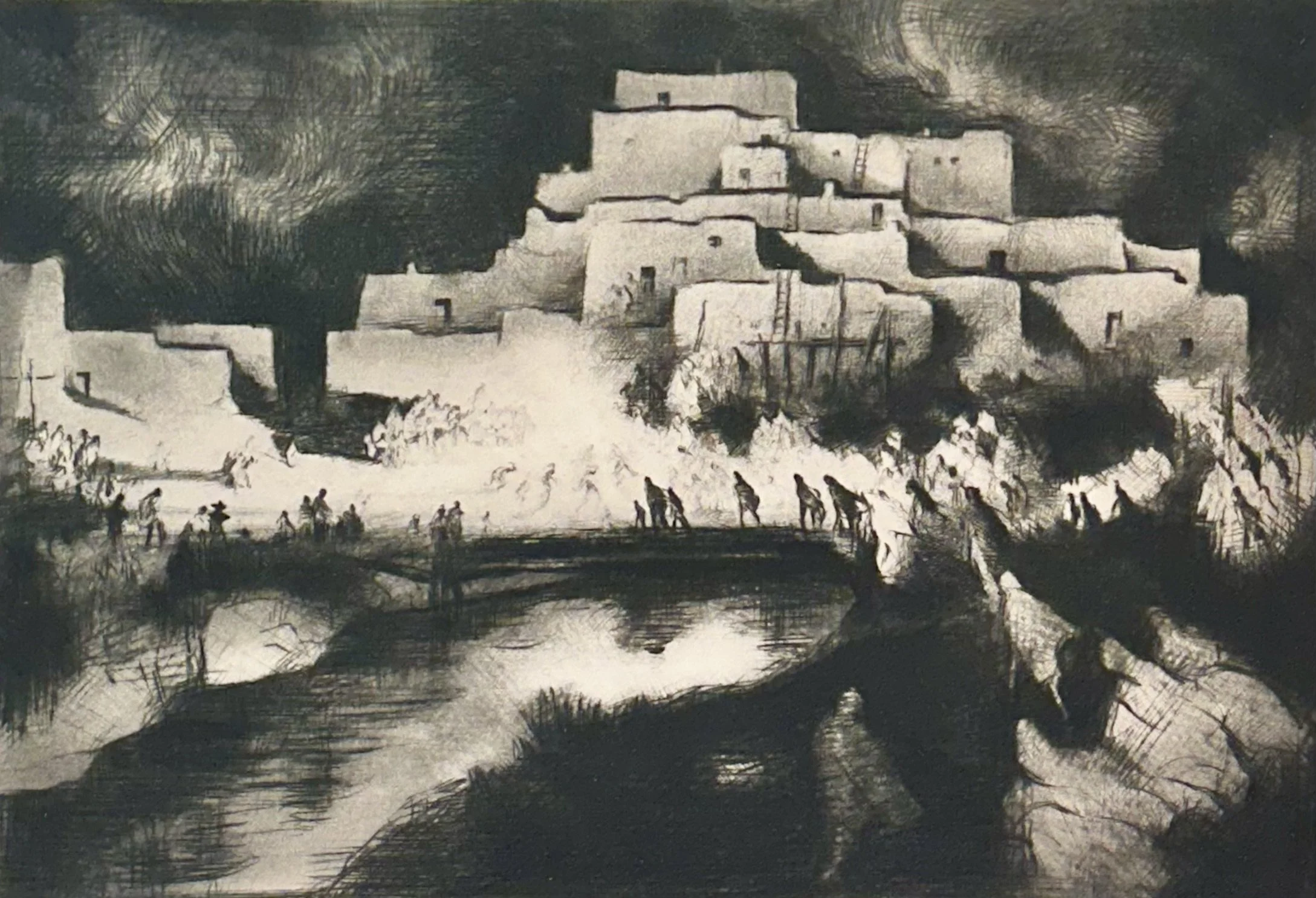
Gene Kloss - Pueblo Firelight Dance, drypoint/aquatint, 11 ½ x 16 ½ in.
Master printmaker Gene Kloss gives us a dramatic aerial view of a ceremonial dance at Taos Pueblo. The artist’s masterful use of aquatint creates the deep shadows and highlights, heightening the drama of the scene.
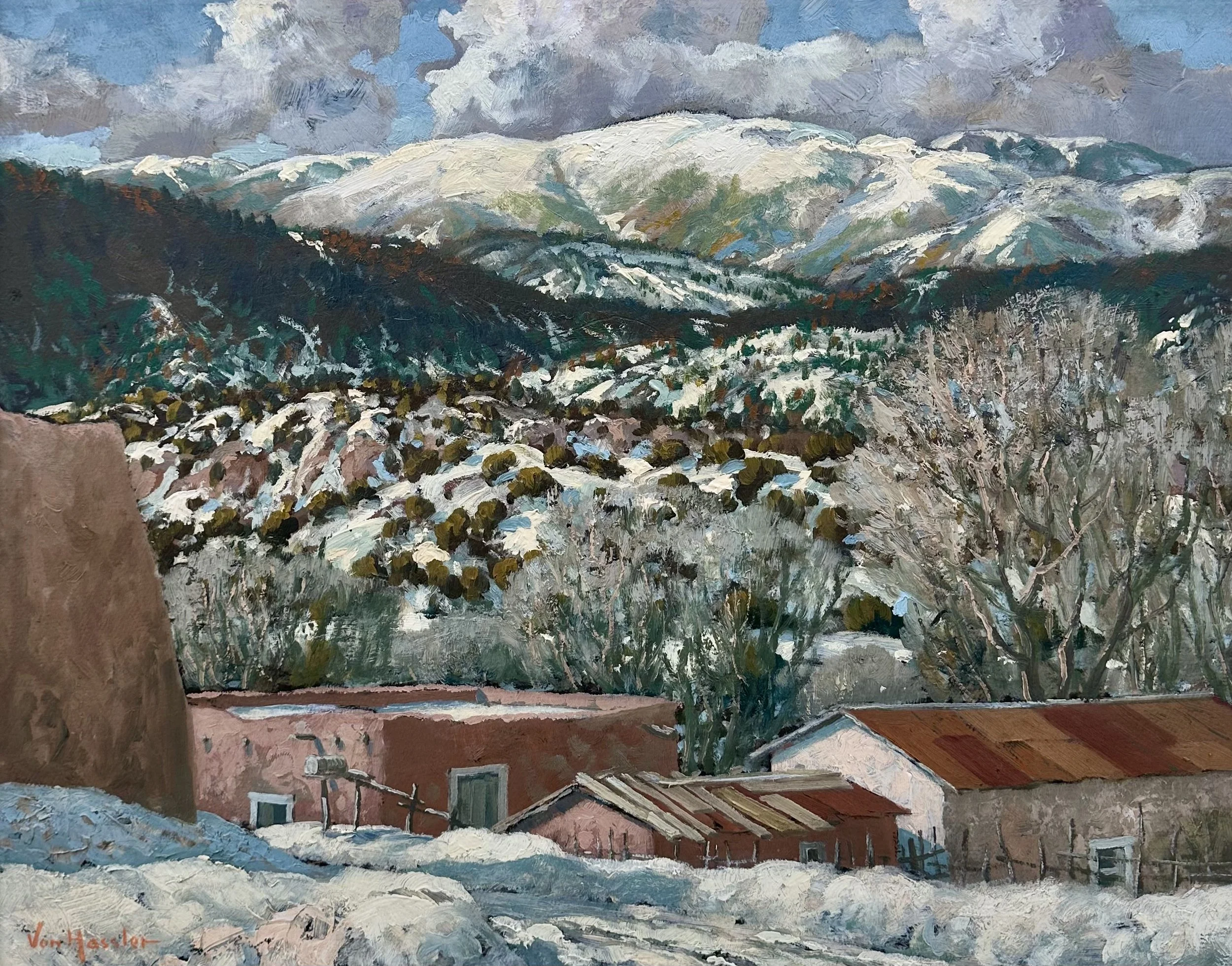
Carl Von Hassler - Winter in San Antonio, N.M., oil on board, 20 ½ x 25 ½ in.
Often called “The Dean of Albuquerque Artists”, Carl Von Hassler was truly an artist’s artist. He was a dedicated landscape painter who worked in plein air, expressing the changing light and color with utmost fidelity.
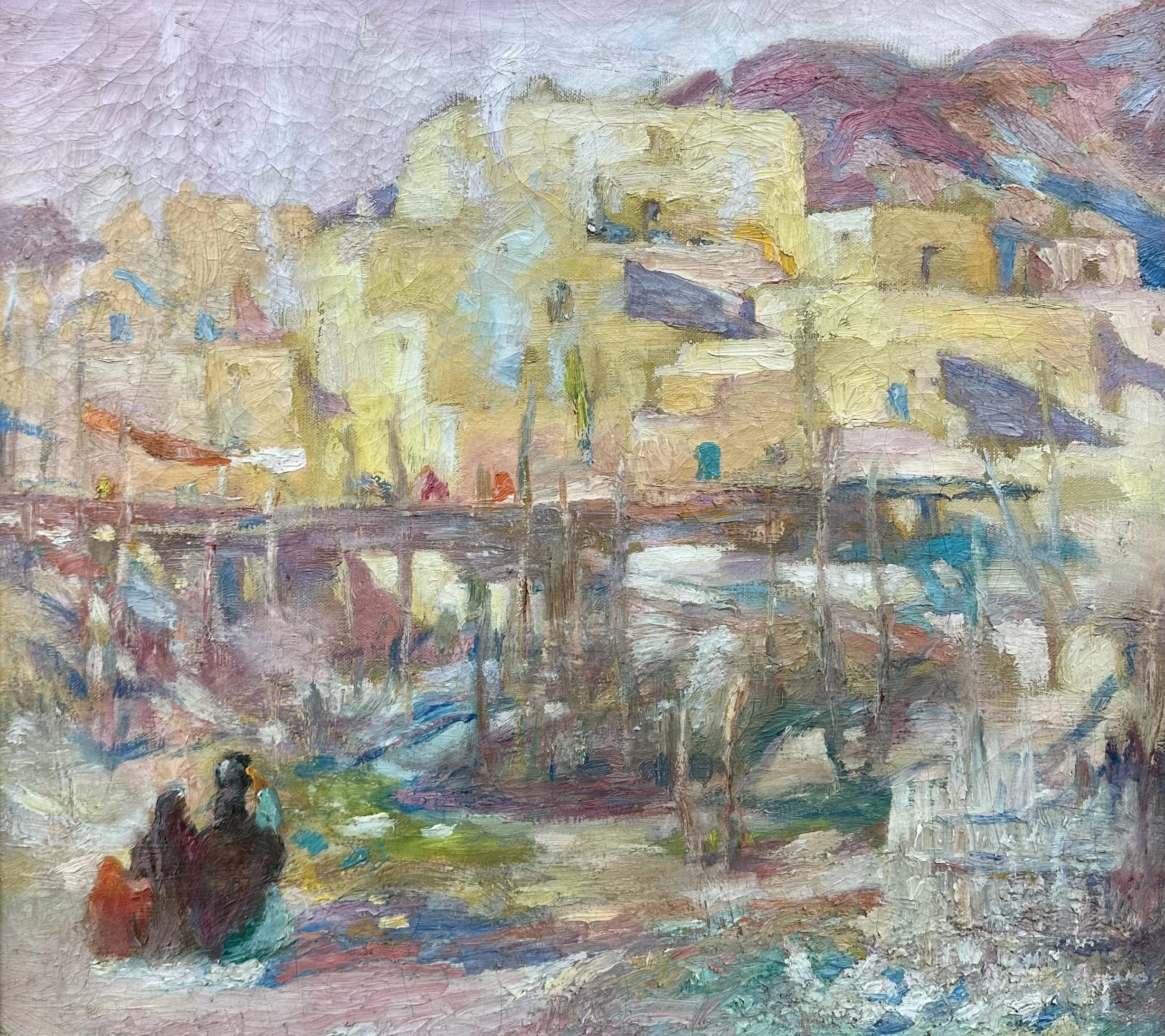
Charles Austin Ayers - By the Pueblo, oil on canvas, 18 x 20 in.
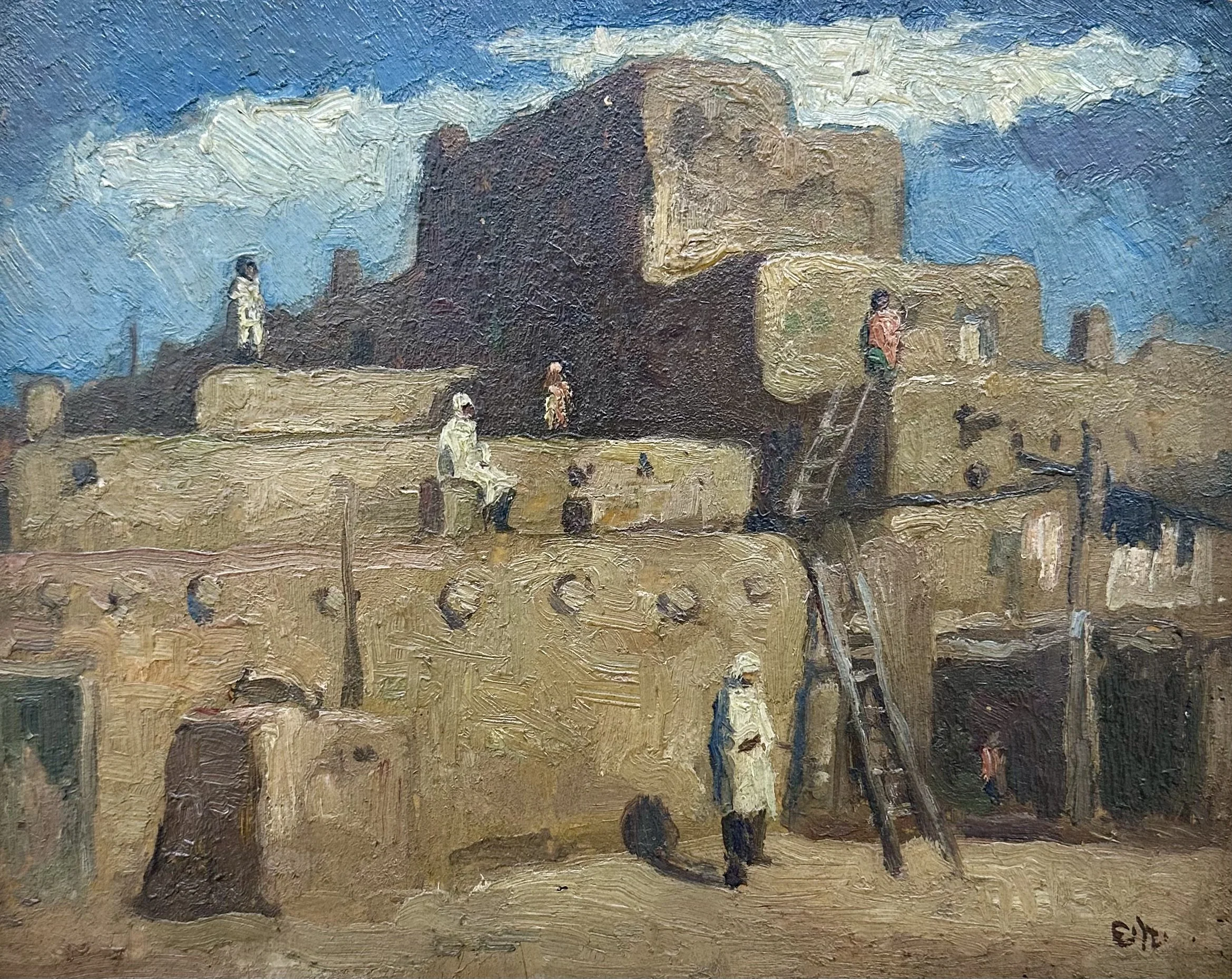
E. Martin Hennings - Nighttime at the Pueblo, oil on board, 8 ¾ x 11 in.
After studying at the Art Institute of Chicago and the Royal Academy in Munich, E. Martin Hennings worked as a muralist in the Windy City. At the mayor’s urging, Hennings visited Taos, and like so many artists of the day, he was hooked. Hennings later moved there permanently, joining the famed artists’ group, the Taos Society of Artists.
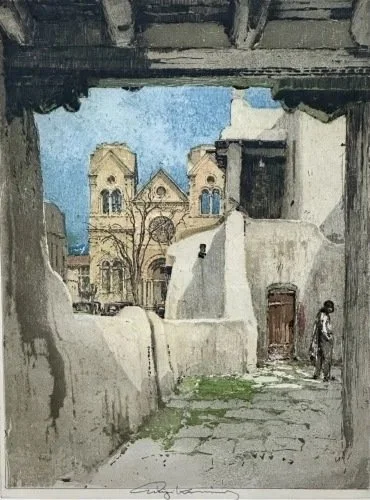
Luigi Kasimir - Santa Fe, La Siesta, aquatint, 13 ¼ x 11 in.
Luigi Kasimir was born into a family of prominent artists, quickly proving himself to be a true talent. Kasimir’s creative love was printmaking, an art form in which he would personally become a pioneer, developing the first technique to produce color etchings.
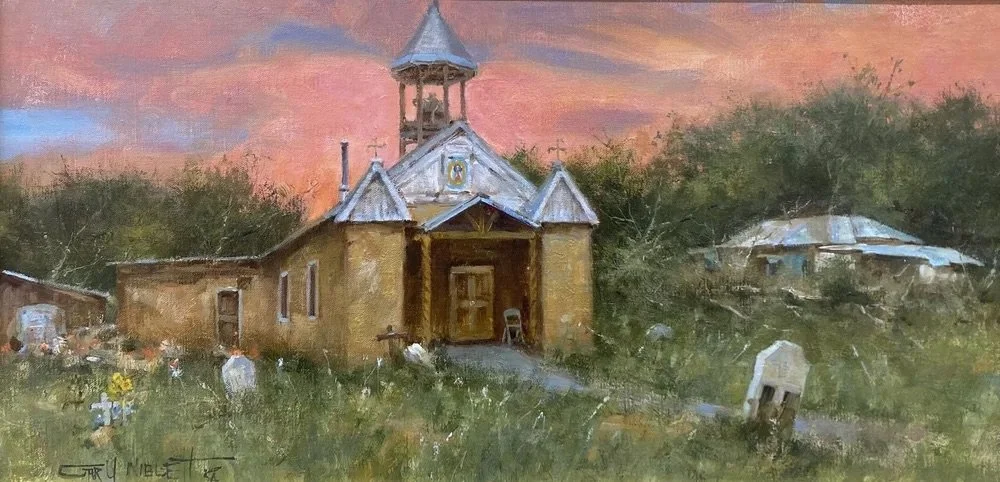
Gary Niblett - Tranquil Evening (East of Pecos), oil on canvas board, 12 x 24 in.
Gary Niblett is renowned for his landscapes, whose moods are set by their vibrant skies. This work is no exception, with a soft, evening sunset and a classic adobe church, radiating peace and contentment.
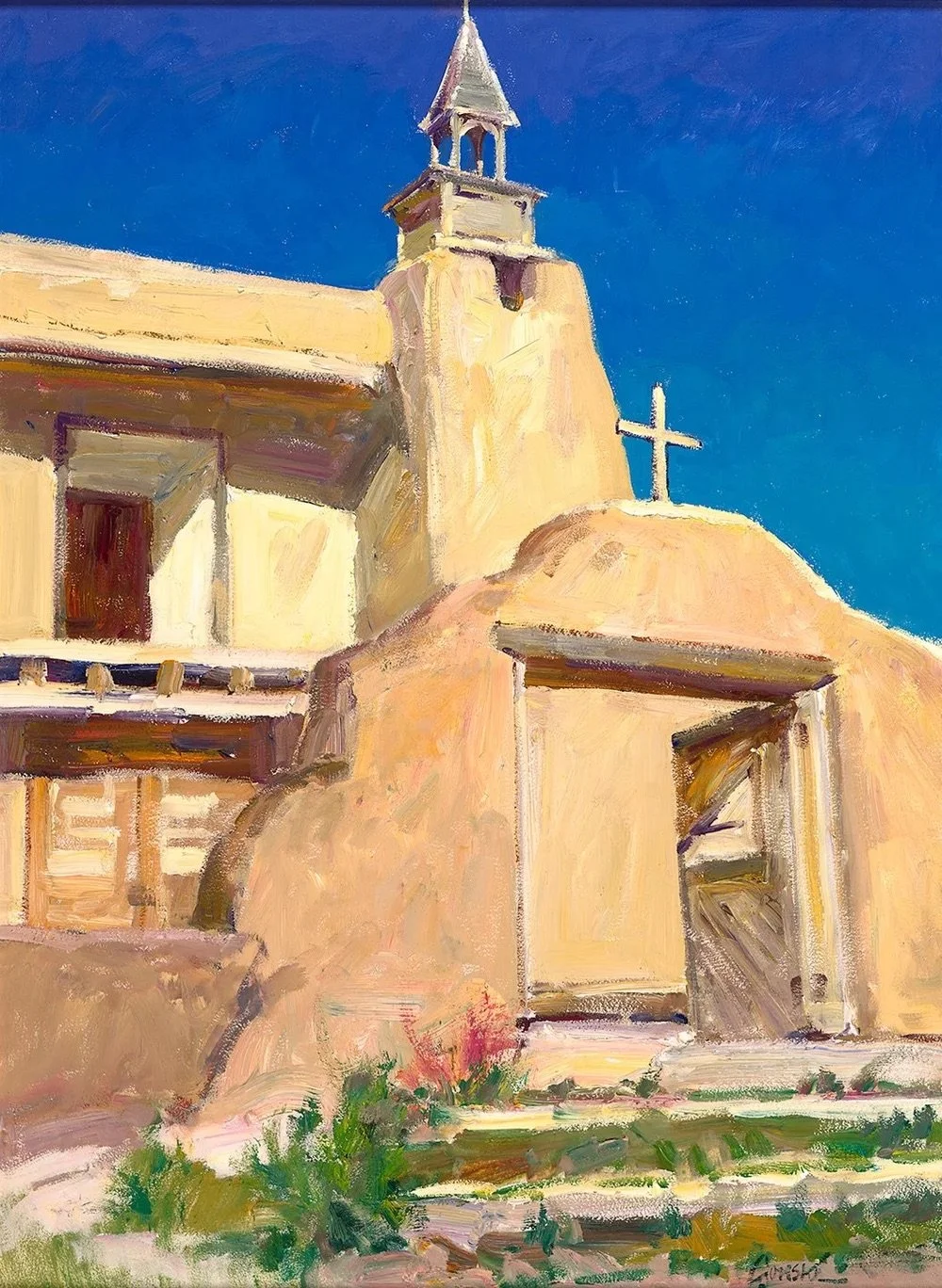
Walt Gonske - San Jose de Gracia Church, oil on panel, 30 x 22 in.
Walt Gonske hones in on the golden, sun-baked wall of San Jose de Gracia Church in Las Trampas, NM. The quick, instinctive nature of the brushstrokes epitomizes Gonske’s way of working, which focuses on capturing the essence of a scene in the moment.
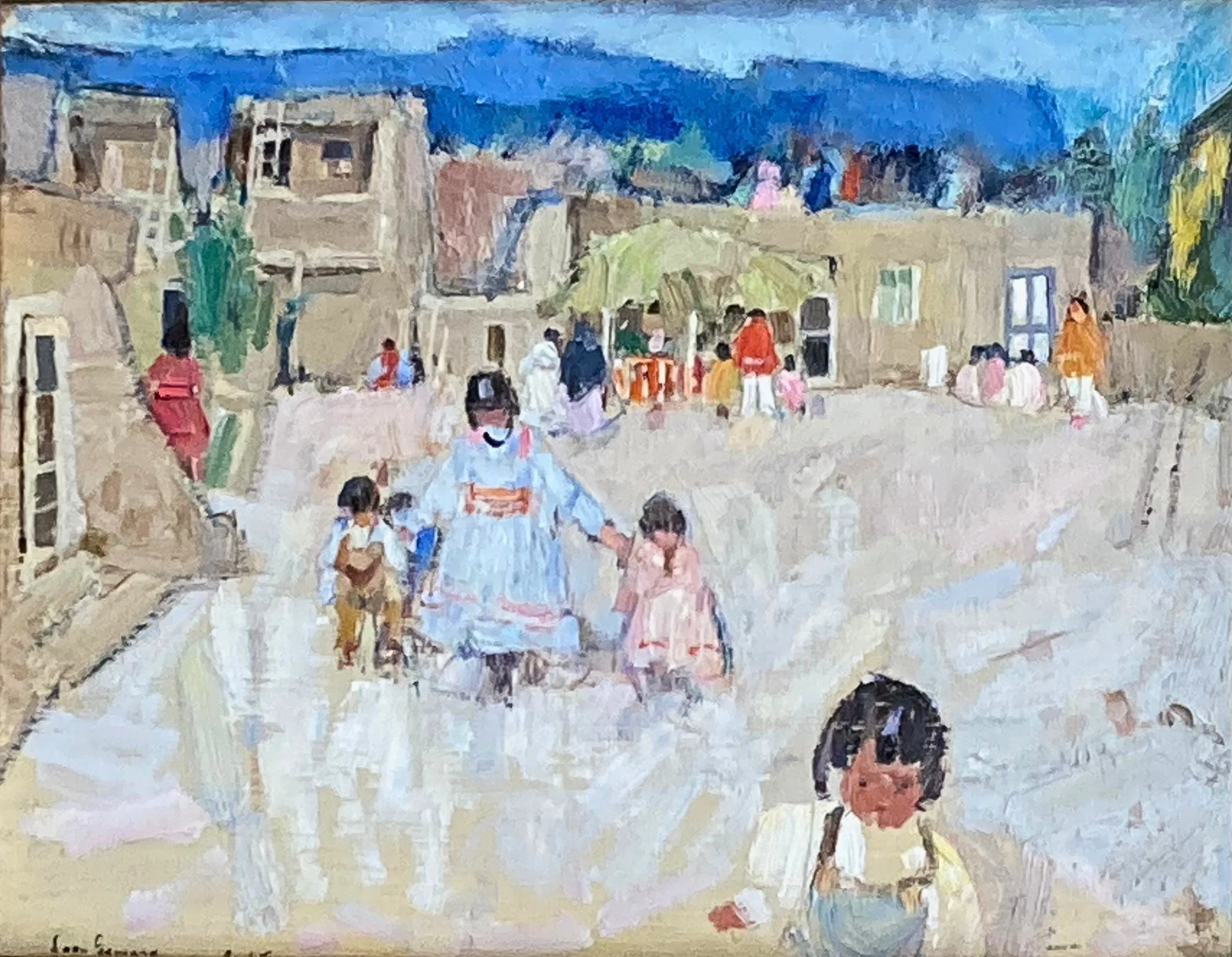
Leon Gaspard - Cochiti Pueblo, 1925, oil on board, 10 x 14 in.
Leon Gaspard was a Russian-born artist who ventured to Taos in the 1920s. Gaspard’s travels in Europe, Asia, and his time in New Mexico, heavily influenced his work, which centered on bustling marketplace scenes and brightly-clad villagers. His work is vibrant and innovative, with a timeless quality that has attracted collectors for decades.
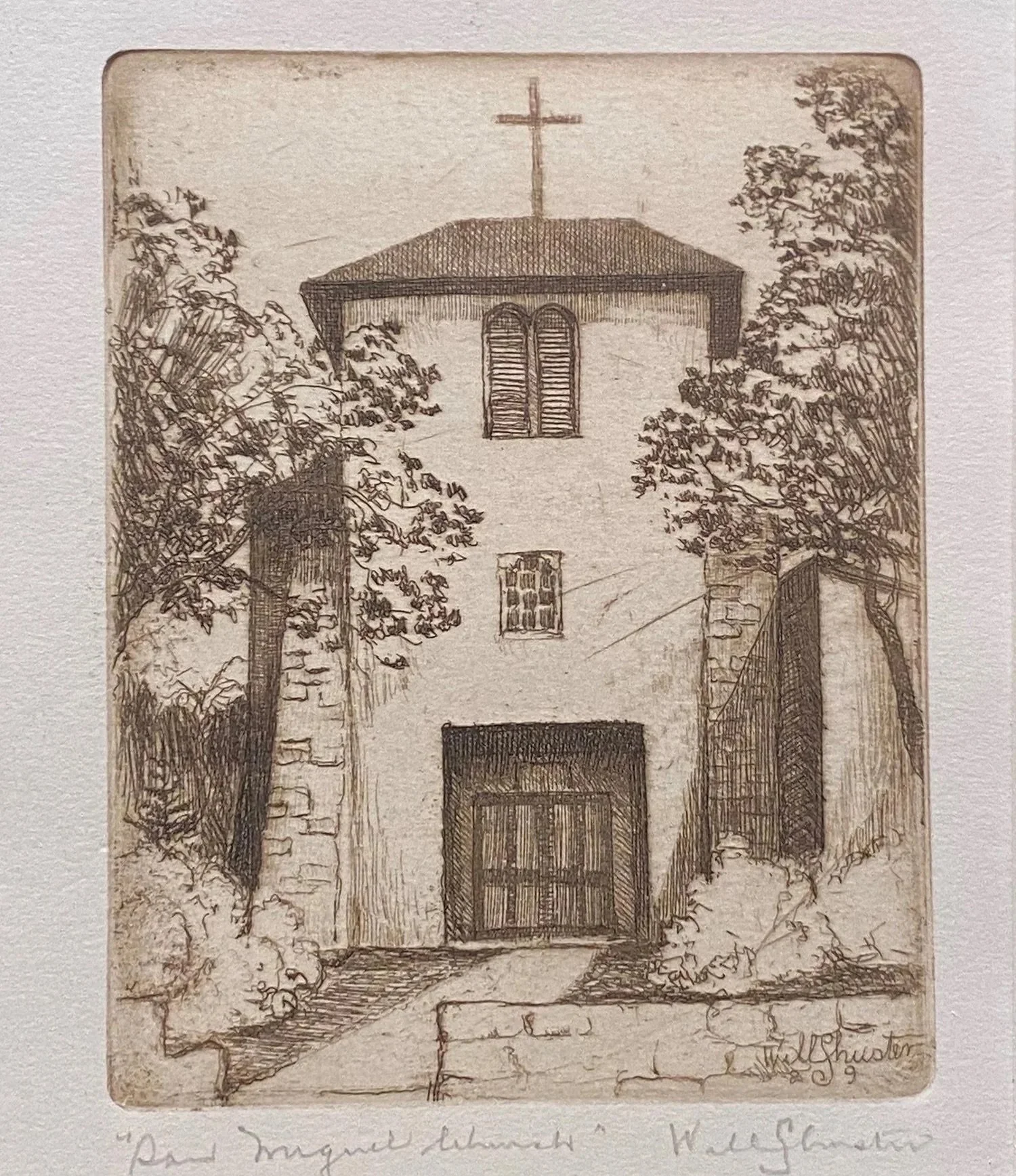
Will Shuster - San Miguel Church, etching, 4 x 3 in.
Will Shuster, a member of the early 20th-century artists’ group, Los Cinco Pintores, was a self-taught artist and well-loved local figure in Santa Fe. Some of his most cherished pieces are his etchings of famous sites in the city, like San Miguel Church. Shuster remains a local legend for holding the first burning of Zozobra in his backyard in 1924.
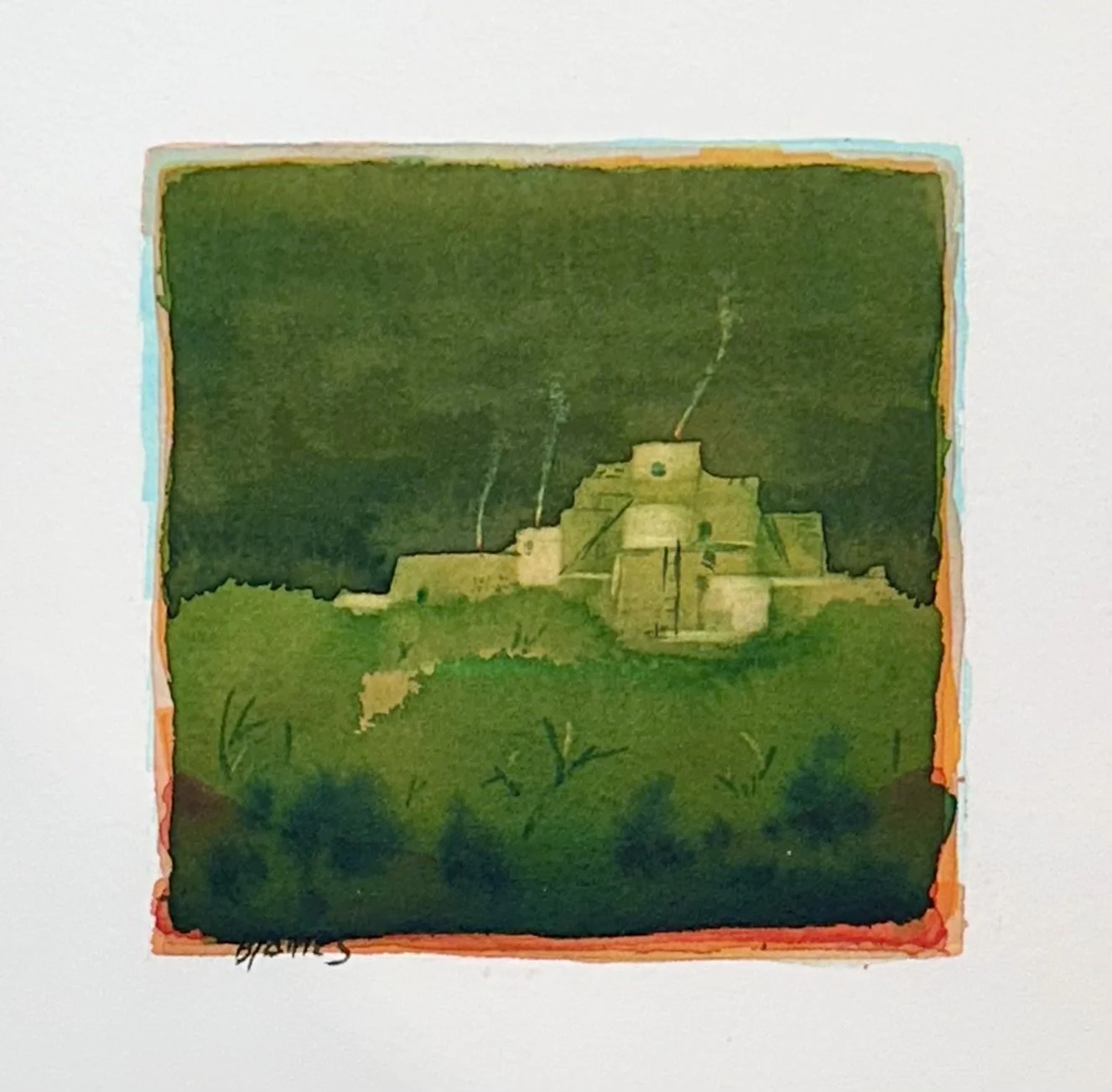
Betsy James - Green Pueblo, watercolor & gouache on paper, 5 x 5 in.
Betsy James is a lover of history, nature, art, and the culture of her native New Mexico. A professor at the University of New Mexico in Albuquerque, James combines her many passions in her art, which she creates from memory and imagination.
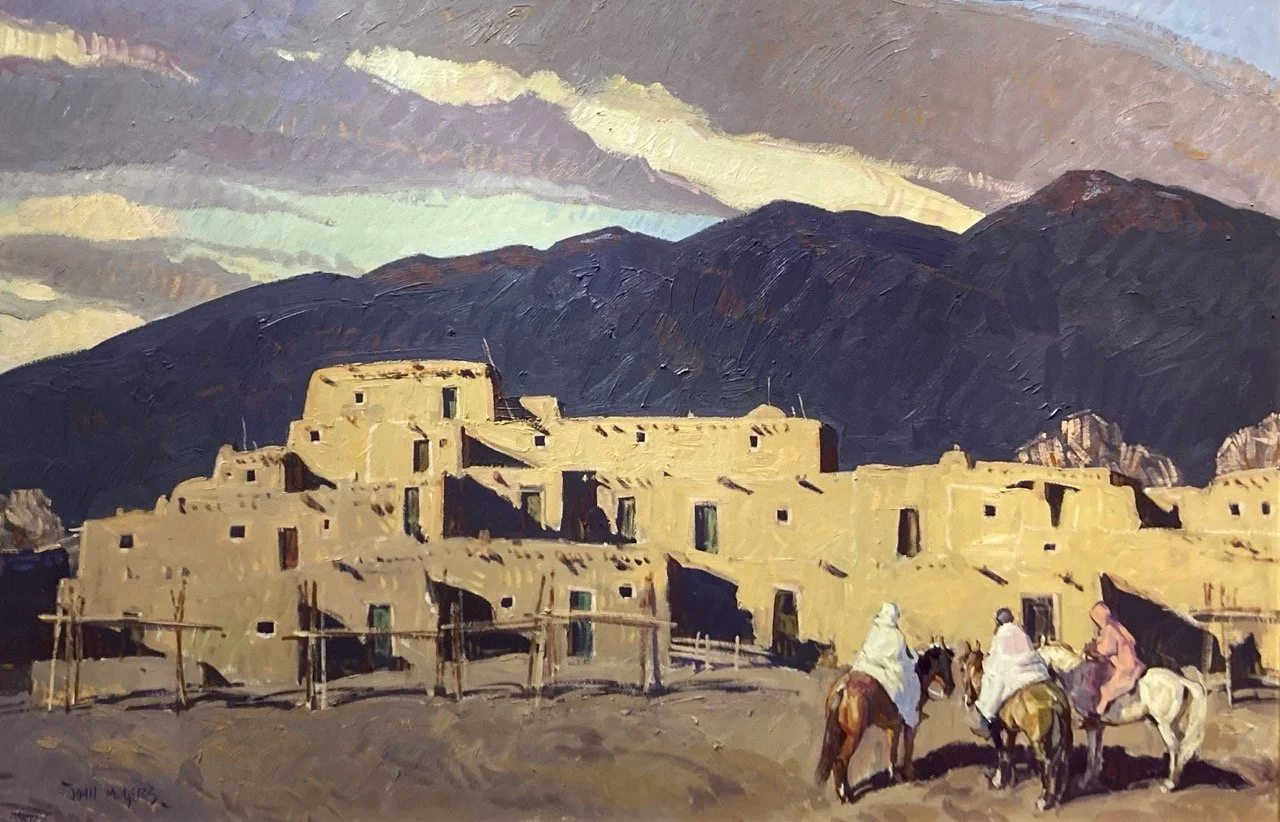
John Moyers - Fall in the Air, oil on board, 24 x 36 in.
Stark, stormy light falls over Taos Pueblo in this eye-catching John Moyers piece. Known for his loose, graphic style, Moyers’ work has an effortless quality, underpinned by technical prowess and an eye for color.