16 Works Most Divine
/There’s a certain mystique to holy places. From the glowing adobe façades of New Mexican churches to the palatial cathedrals of Europe, this transcendent beauty is impossible to describe—and is best captured in art.
Enjoy this selection of works that harness the divine qualities of important spiritual sites, all available at Nedra Matteucci Galleries in Santa Fe.
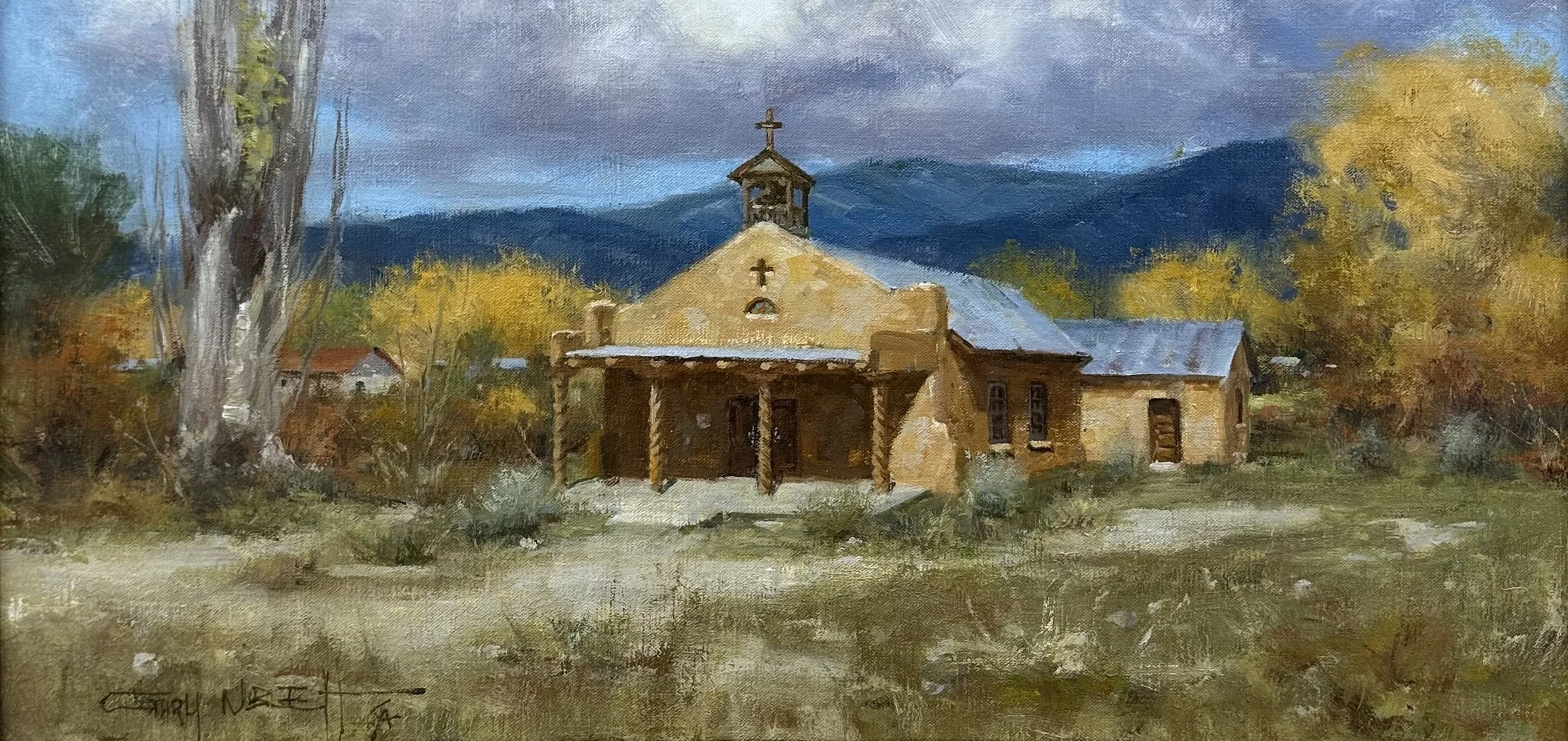
Gary Niblett - New Mexico Autumn (Chamita, N.M.), oil on canvas board, 12 x 24 in.
New Mexico’s adobe churches are a fixture of the landscape here, and no one captures them better than Gary Niblett. Once an illustrator for Hanna-Barbera, Niblett is best known for his paintings of cowboy life and, more recently, idyllic Southwestern missions.
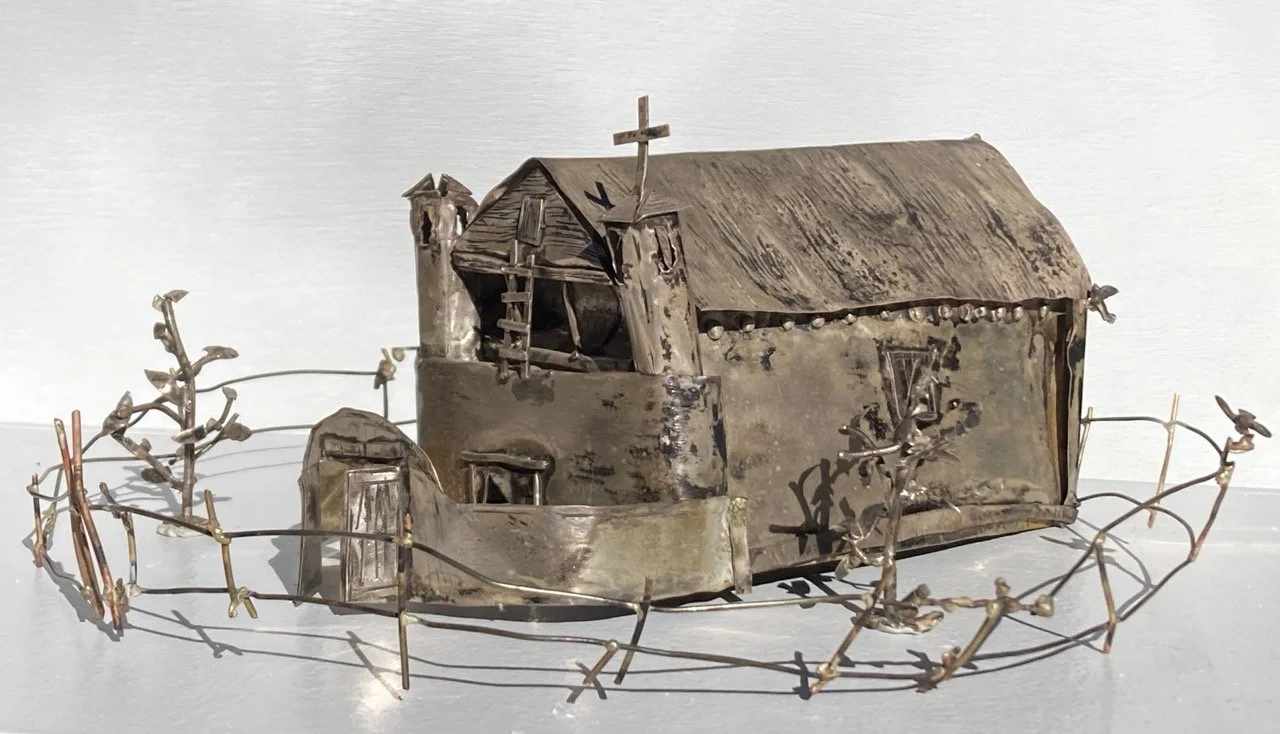
Catherine Maziére - El Sanctuario de Chimayo, sterling silver, 5 ¾ x 14 x 12 in.
Born in Grenoble, France, Catherine Maziére has called Santa Fe home for over forty years. Her silver sculptures and jewelry are often inspired by local architecture, namely the celebrated sanctuaries and cathedrals of northern New Mexico.
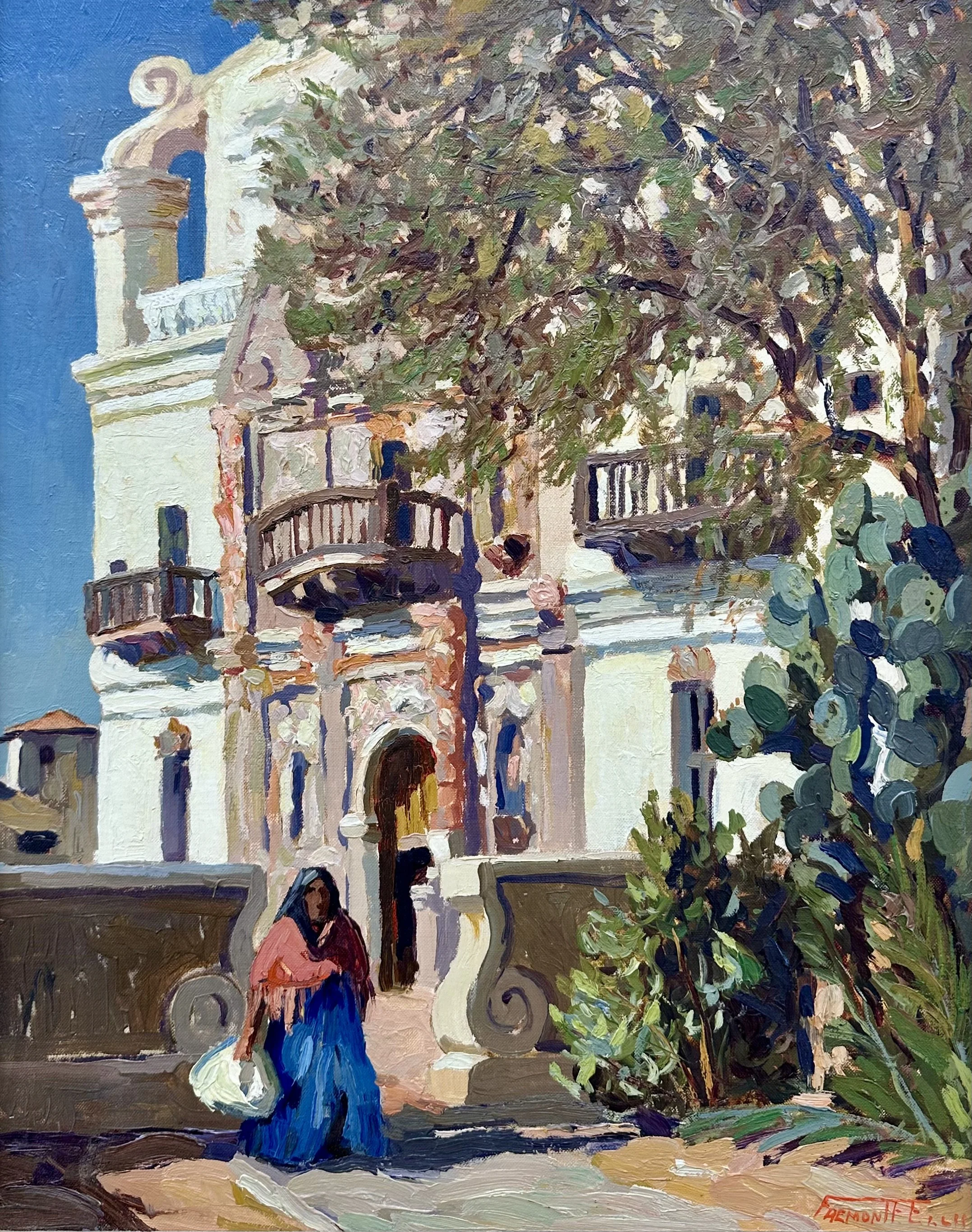
Fremont Ellis - San Xavier del Bac, oil on board, 20 x 16 in.
From rural cabins amid autumn foliage to the sun-soaked walls of San Xavier del Bac Mission near Tucson, Arizona, Fremont Ellis was a master at conveying the emotion of a place. Here the Mission is more than a building—it is a presence, filling nearly the entire canvas. Ornate, immense, and glorious.
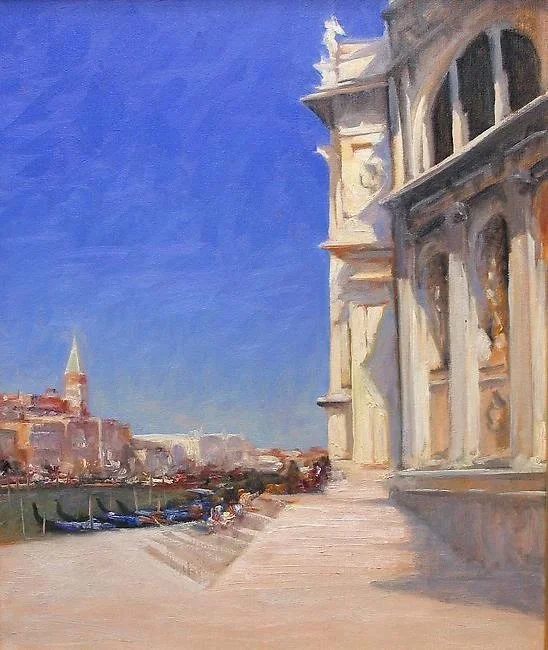
William Berra - View from Santa Maria, della Salute, oil/linen, 24 x 20 in.
In this unique angle of Venice, William Berra plays with perspective to include a swath of blue sky over Santa Maria della Salute. Berra enjoys pushing the boundaries of the “expected” in his work, experimenting with negative space, canvas, and composition to change the emotion of a scene.
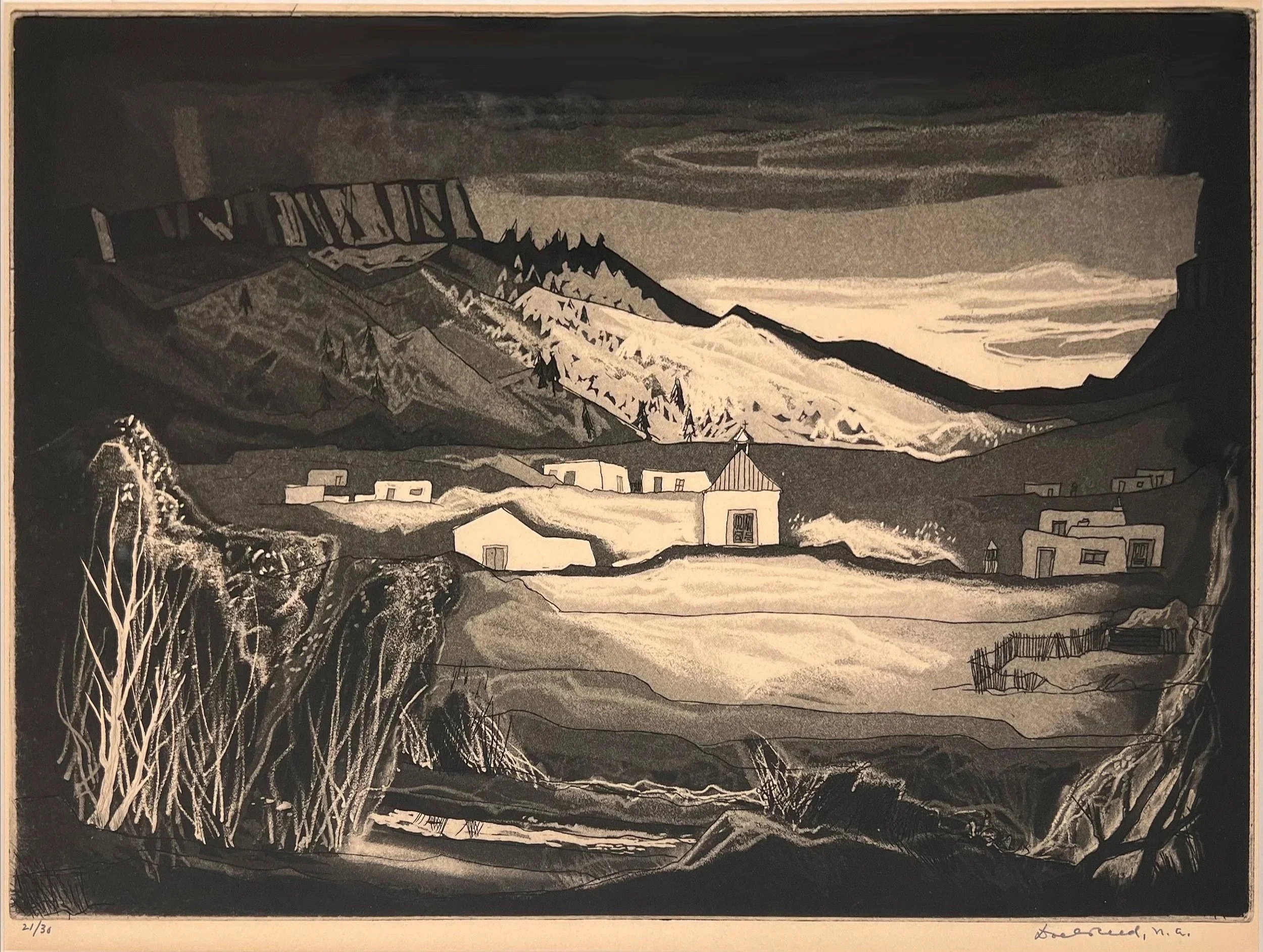
Doel Reed - La Placita, aquatint/paper, 12 ½ x 18 in.
Doel Reed was a pioneer of aquatint, known for his smooth gradations between dark and light. Despite the objective stillness of his landscapes, Reed creates theatrical lighting that fills them with high drama.
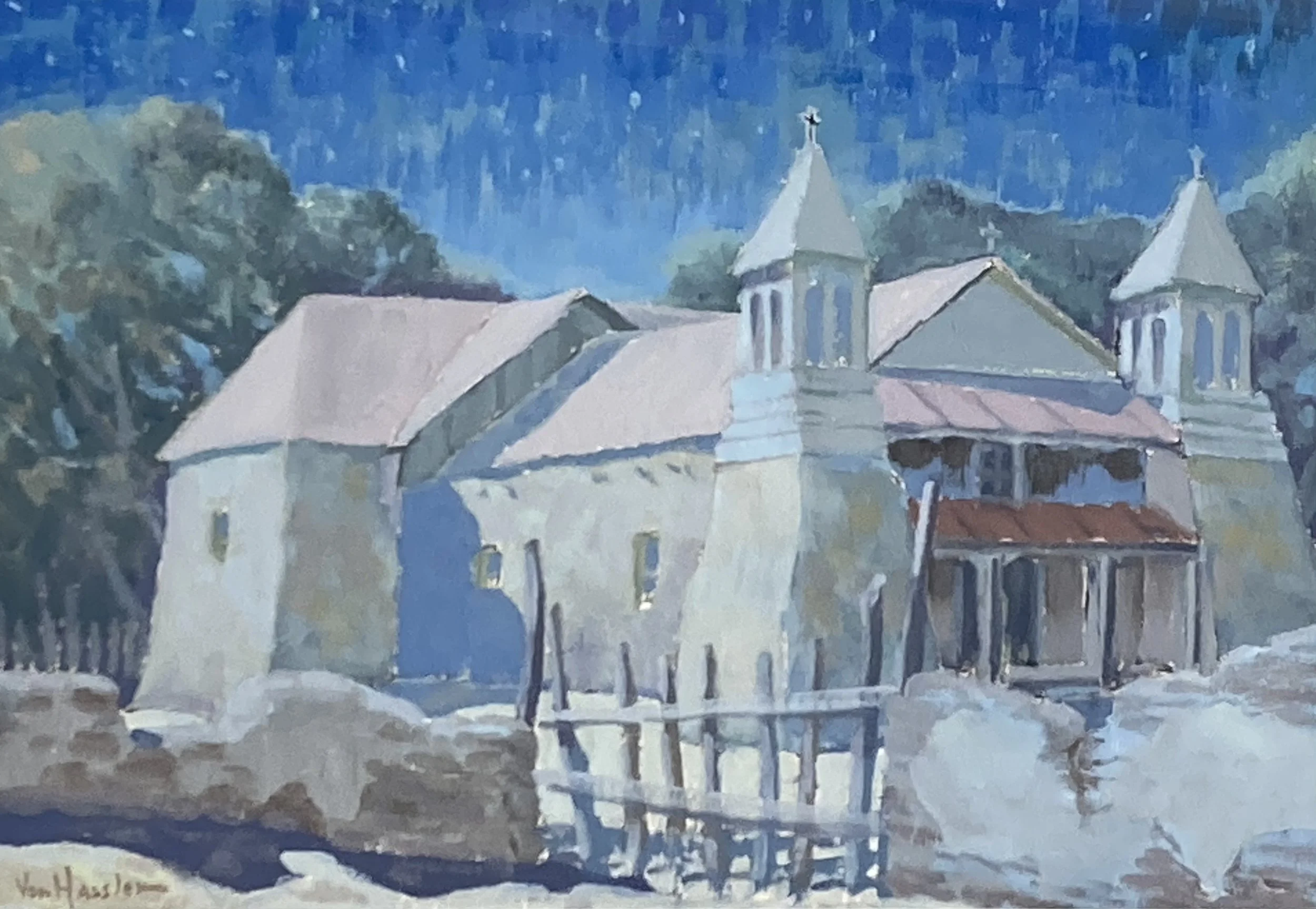
Carl Von Hassler - Moonlight Church, gouache, 14 ¾ x 21 ¼ in.
An avid plein air painter known as the “Dean of Albuquerque artists”, Carl Von Hassler was well-versed in the art of landscape. Von Hassler was known for his fidelity to real world color, which is on full display in this hauntingly beautiful nocturne.
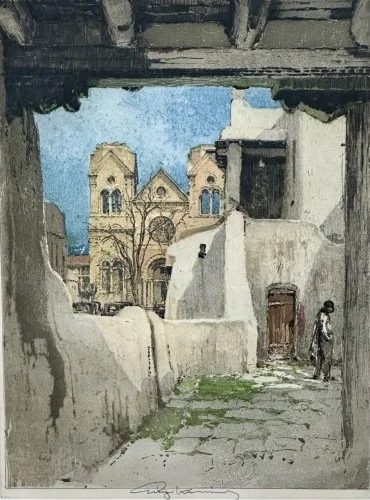
Luigi Kasimir - Santa Fe - La Siesta, aquatint, 13 ¼ x 11 in.
Luigi Kasimir was renowned for his prowess in printmaking. Born to a family of painters in Austria, Kasimir attended the Vienna Academy of Art, where he discovered his love for etching. Ultimately, Kasimir would change the printmaking world forever with his innovative multi-plate coloring process.
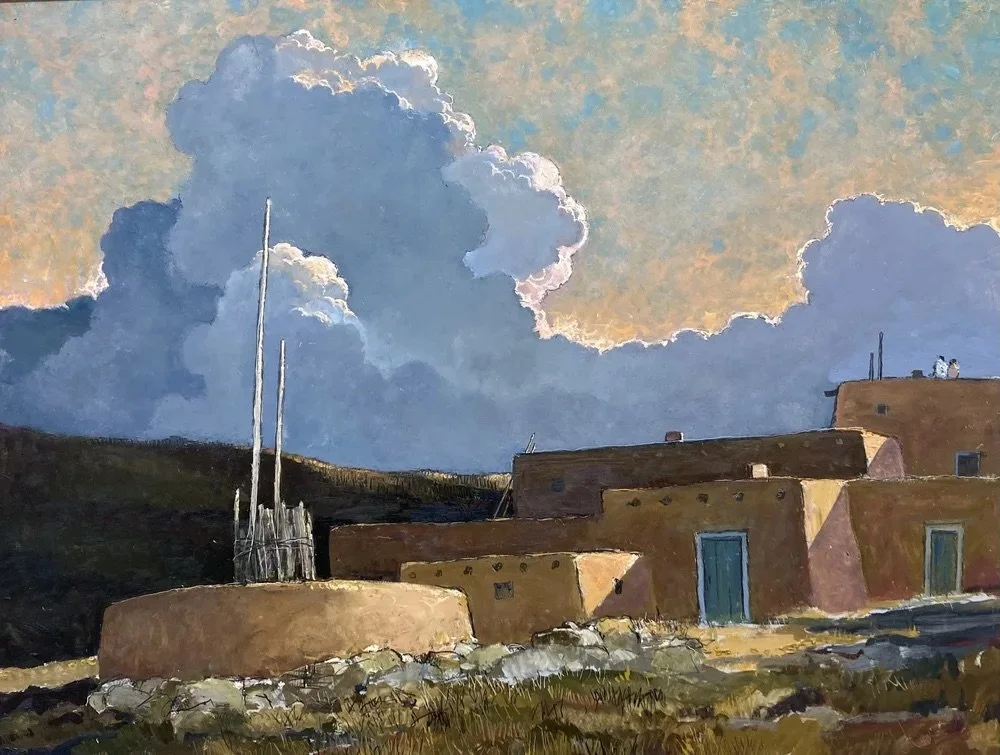
Eric Sloane - Passing Storm, oil on board, 23 ¼ x 30 ¼ in.
Eric Sloane loved the skies. He was passionate about many things—and could rightfully be called a Renaissance Man—but meteorology and cloud study stood out among the rest. This lifelong fascination is evident throughout Sloane’s oeuvre, including in Passing Storm.
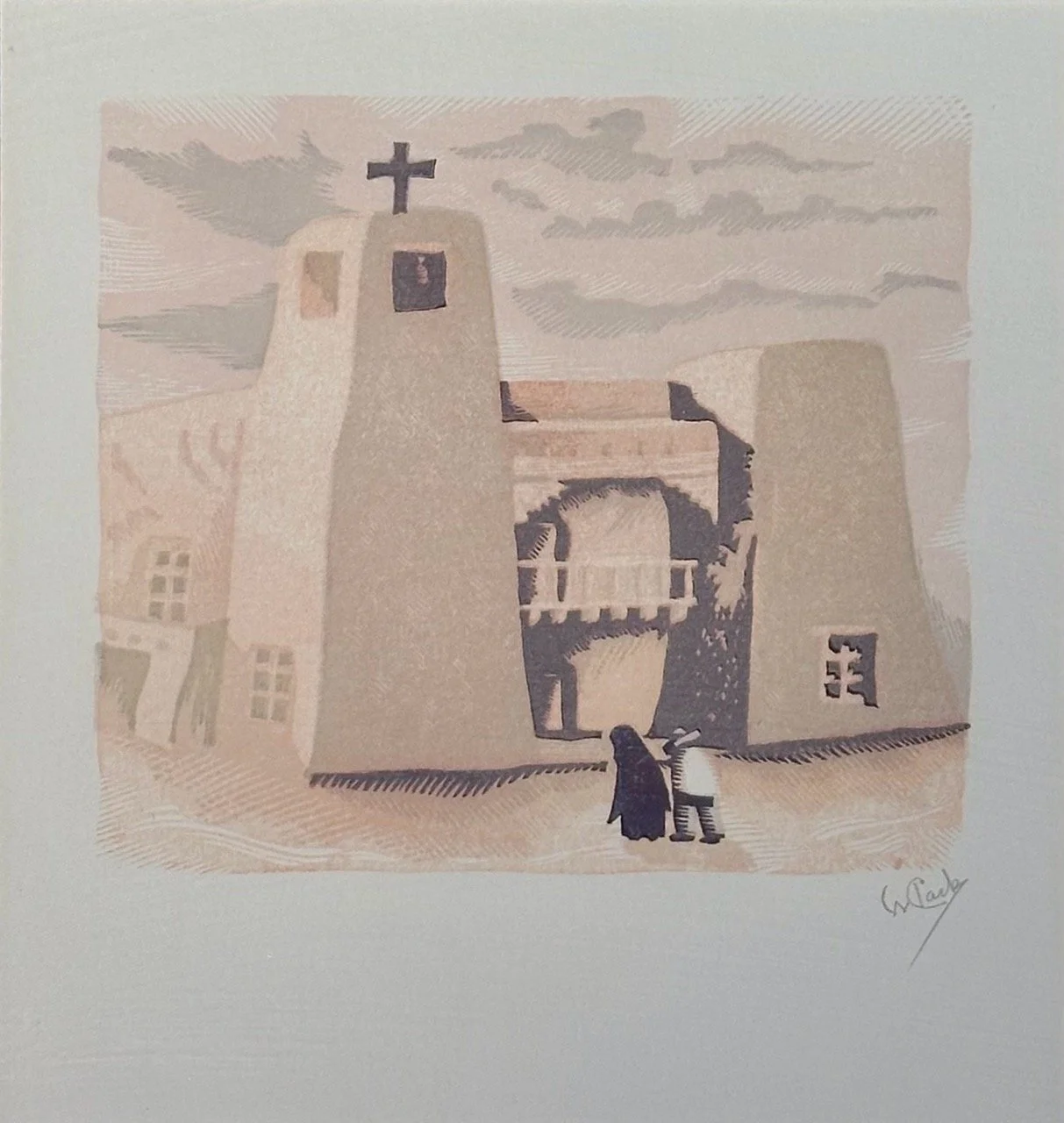
Willard Clark - Christo Rey Church, wood block print, 6 x 5 ¾ in.
Willard Clark was a man of many talents, and his career took him many different directions. As a young man, he opened a print shop in Santa Fe, producing greeting cards and posters for local events. When the Los Alamos National Laboratory opened in 1943, Clark closed up shop and spent the rest of his career working as a master tool and die machinist.
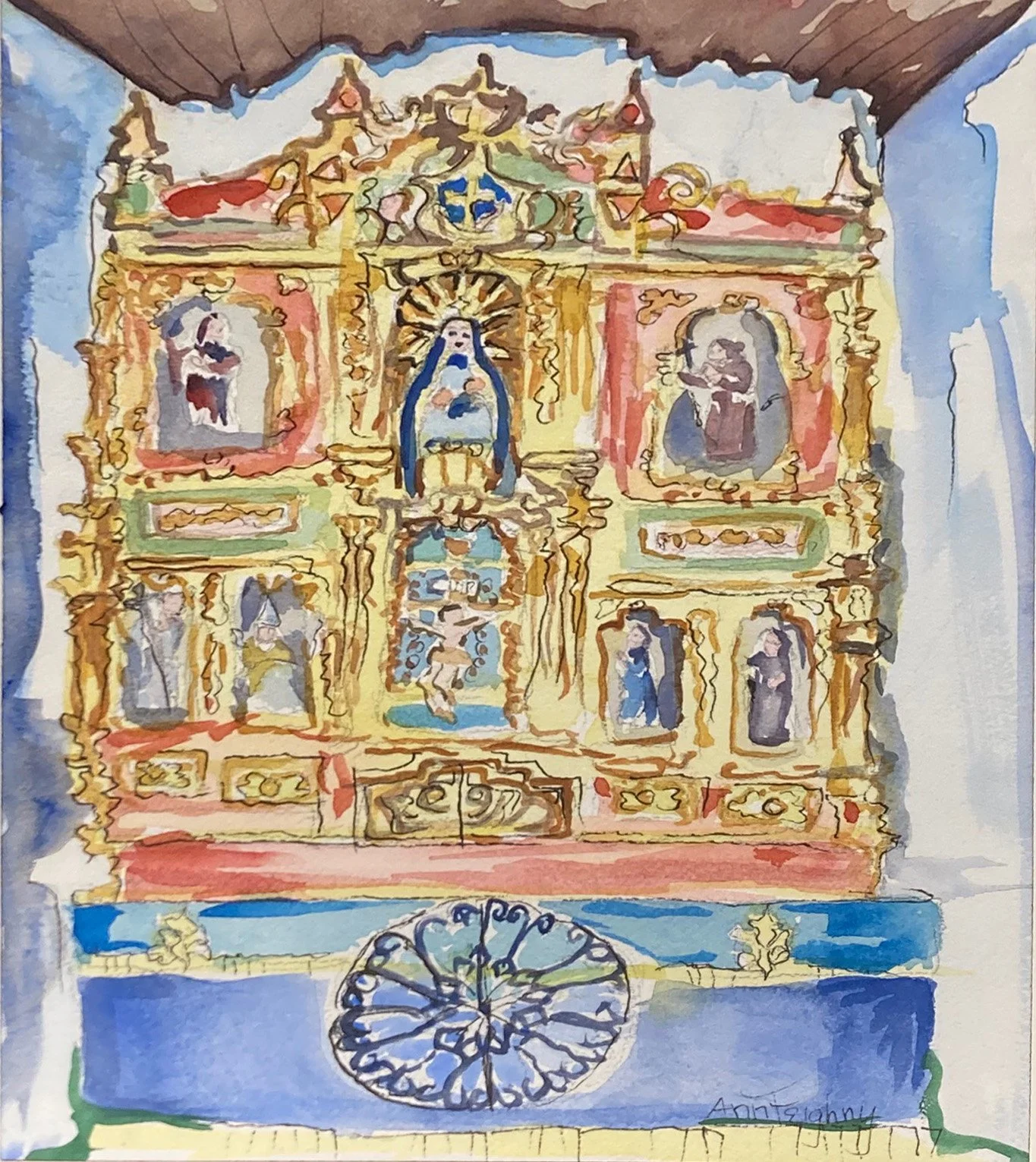
Ann Shannon Feighny - Santa Cruz Church, watercolor, 12 ¼ x 9 in.
Brooklyn-born artist Ann Feighny was a lifelong artist who spent the majority of her years living in the Southwest. Feighny had extensive art education—including a master’s degree from the University of New Mexico—and balanced her time creating with teaching and traveling.
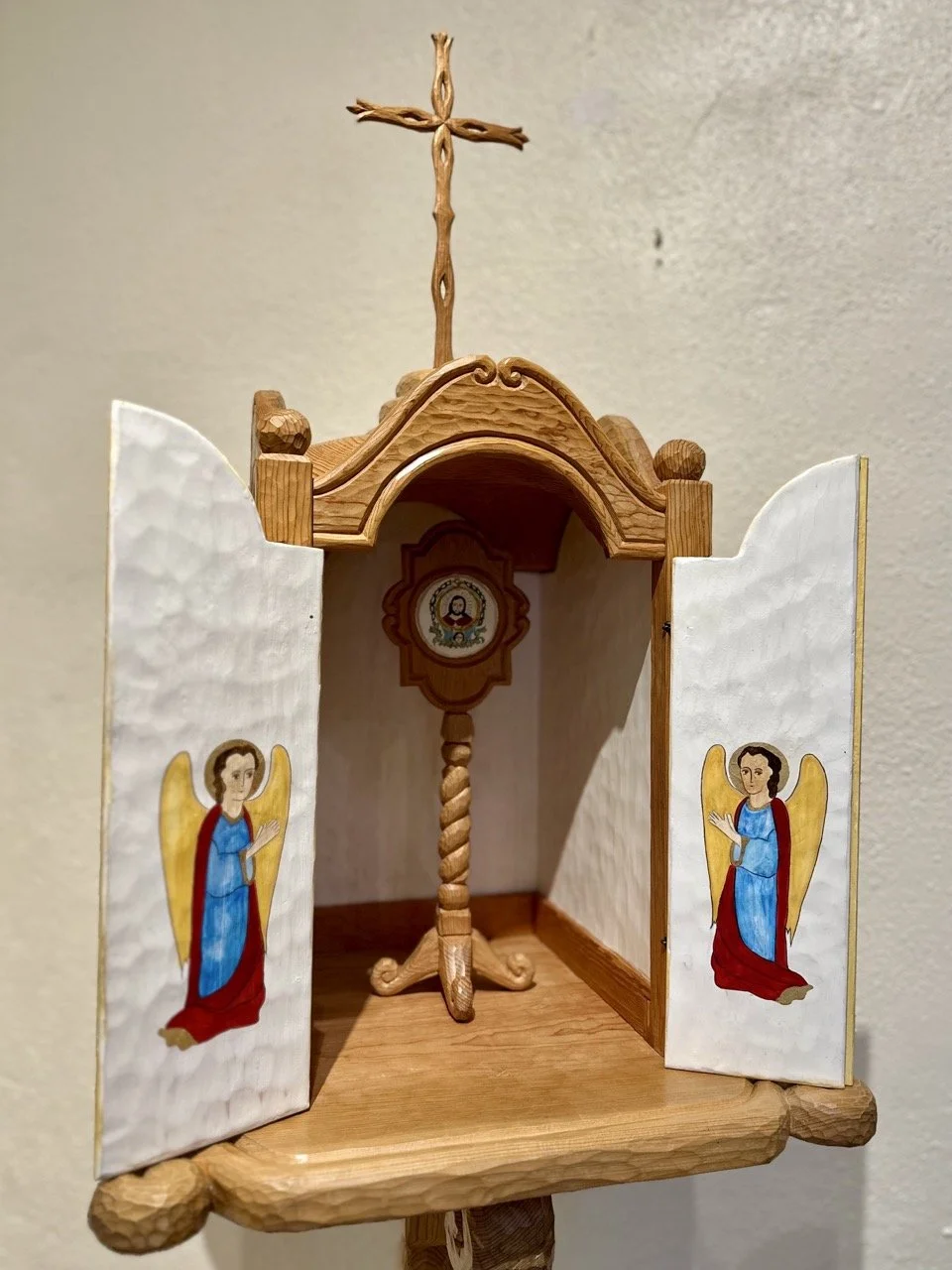
Juanito Jimenez - Unification de Cristianismo, Judaismo y Islam Paz Mundial, wood, gesso, paint, 75 ½ x 17 ¾ x 17 ¾ in.
Santero Juanito Jimenez creates authentic retablos, bultos, and other pieces from New Mexican and Spanish tradition. This intricately carved wooden bulto symbolizes a prayer for peace and harmony between the world’s many faiths.
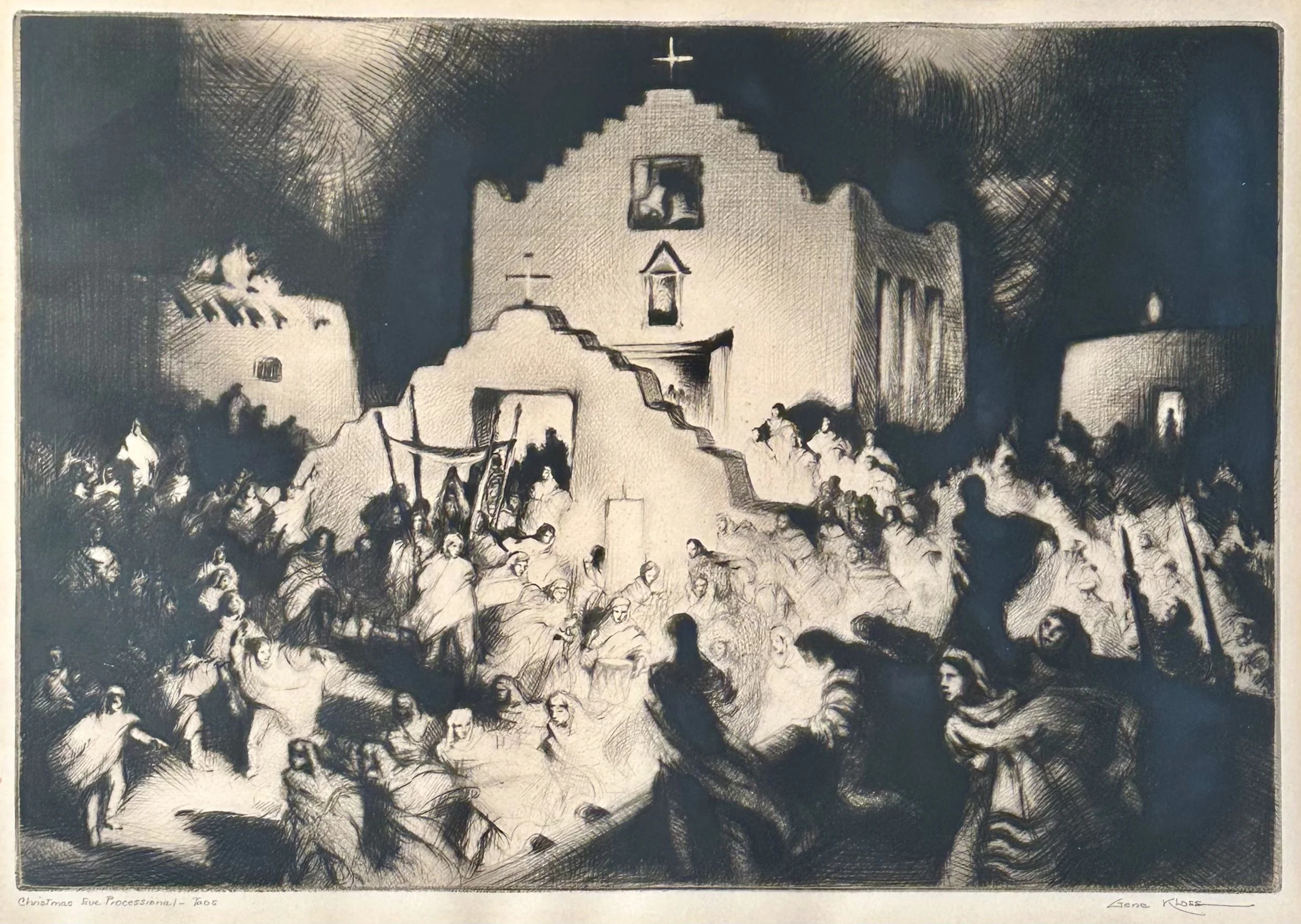
Gene Kloss - Christmas Eve Processional - Taos, Ed. of 50, drypoint, 9 ⅞ x 13 ⅞ in.
Known for dramatic, chiaroscuro etchings, Gene Kloss’s work featured Taos landscapes, people, and cultural traditions, usually in black and white. This illuminated processional scene is a quintessential example of her style.
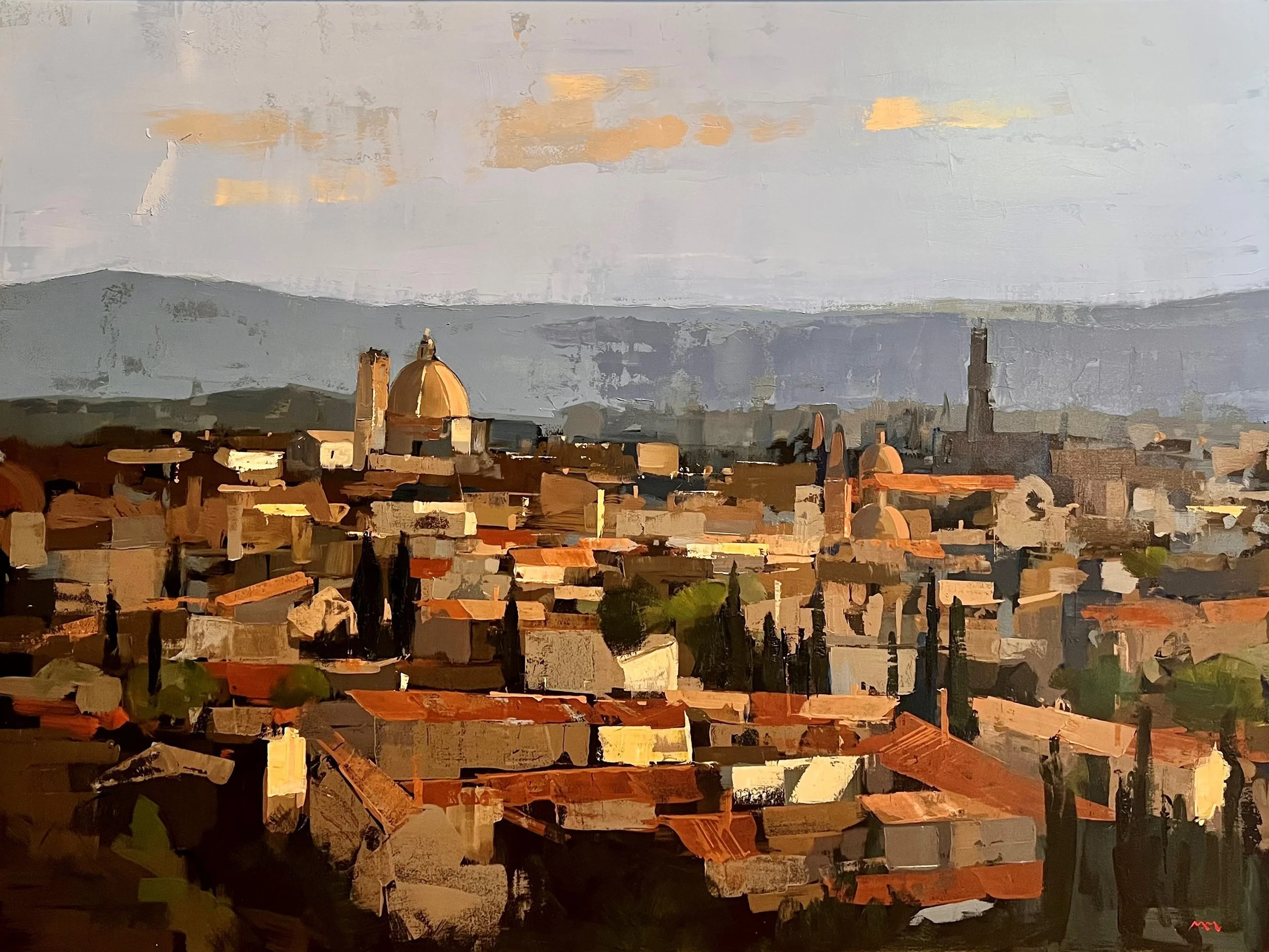
Martin Mooney - Rooftops, Florence, Italy, oil on board, 36 x 48 in.
The great art city of Florence finds itself the subject of this Martin Mooney painting. With a dynamic perspective over the city, Mooney renders the earth-colored rooftops with purposeful pulls of the palette knife, bringing immense texture and energy to the piece.
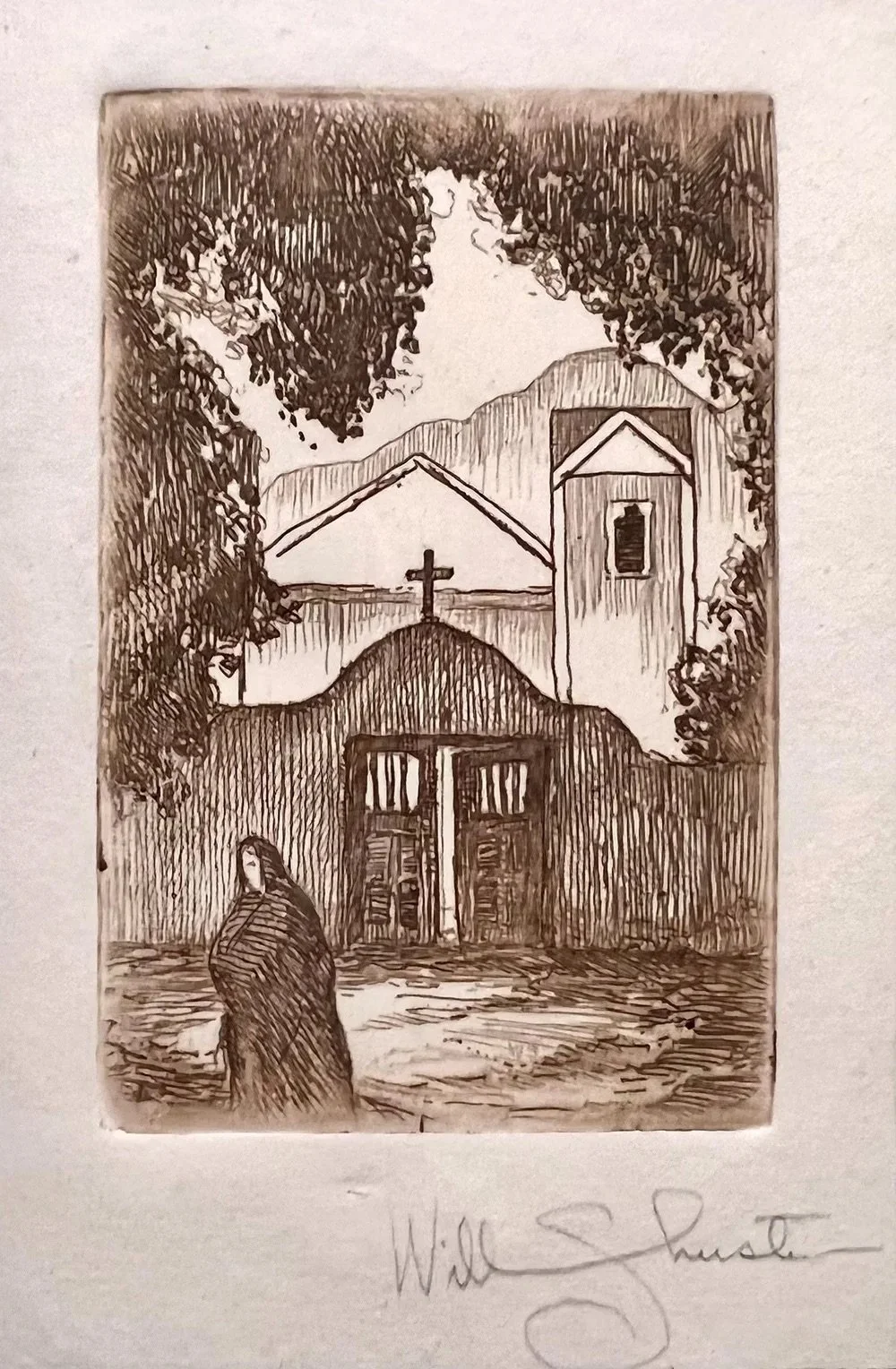
Will Shuster - Woman in Black (Untitled), etching, 4 x 2 ½ in.
Will Shuster was drawn to Santa Fe by the arid climate. After inhaling mustard gas in WWI, he developed a terrible case of tuberculosis, which doctors didn’t think he’d survive. Instead, he slowly recuperated and became a beloved figure in the city, going on to join the artist group, Los Cinco Pintores.
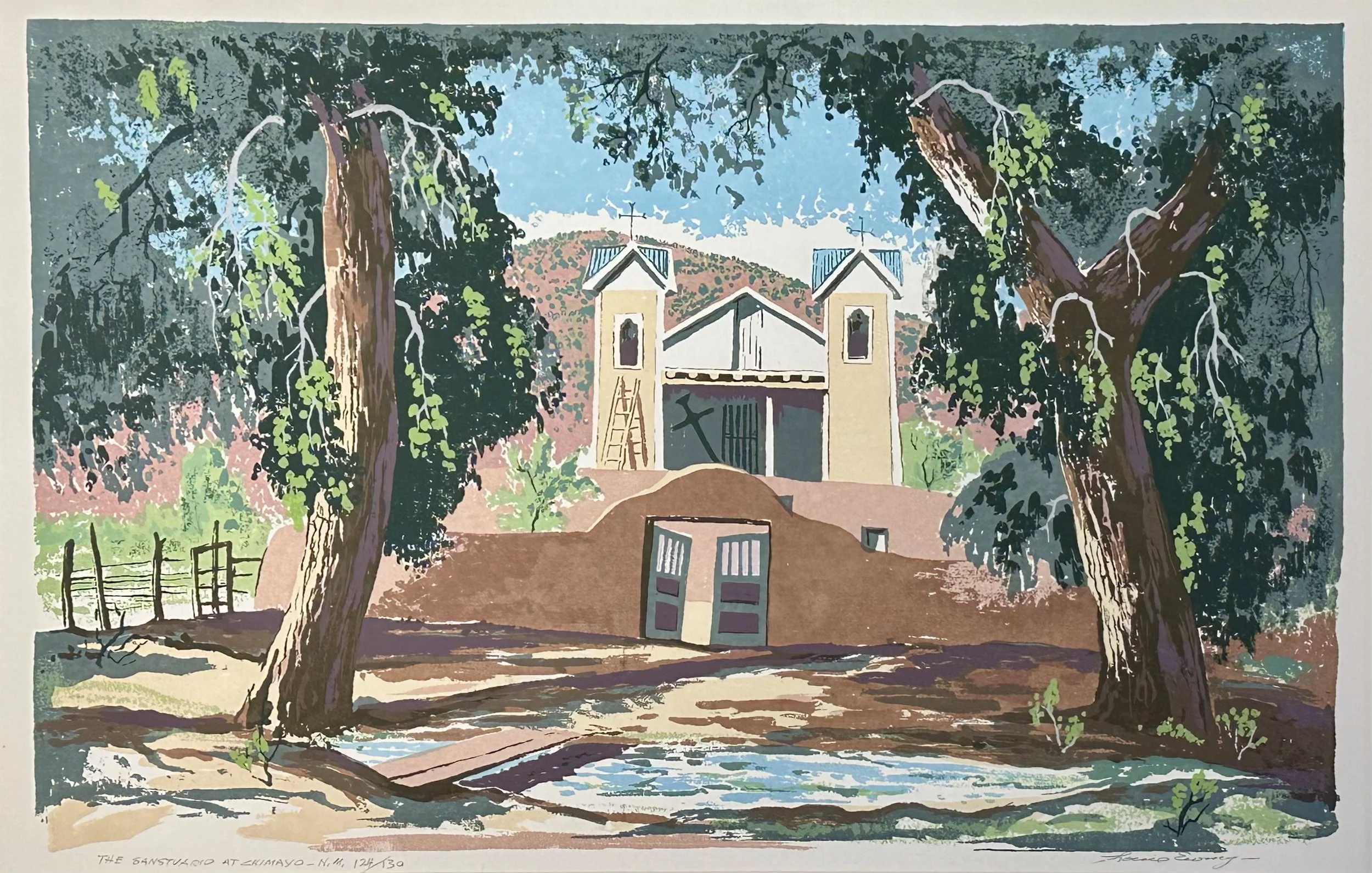
Louie Ewing - The Sanstuario [sic] at Chimayo, N.M., silkscreen, 12 ¼ x 18 ¾ in.
After following his art instructor to Santa Fe in 1935, Louie Ewing became involved in the WPA’s Federal Art Project. When the government sent supplies for silkscreen, Ewing was tasked with mastering the art form to teach new students. This led to Ewing’s renown as one of the first to work creatively with serigraphy.
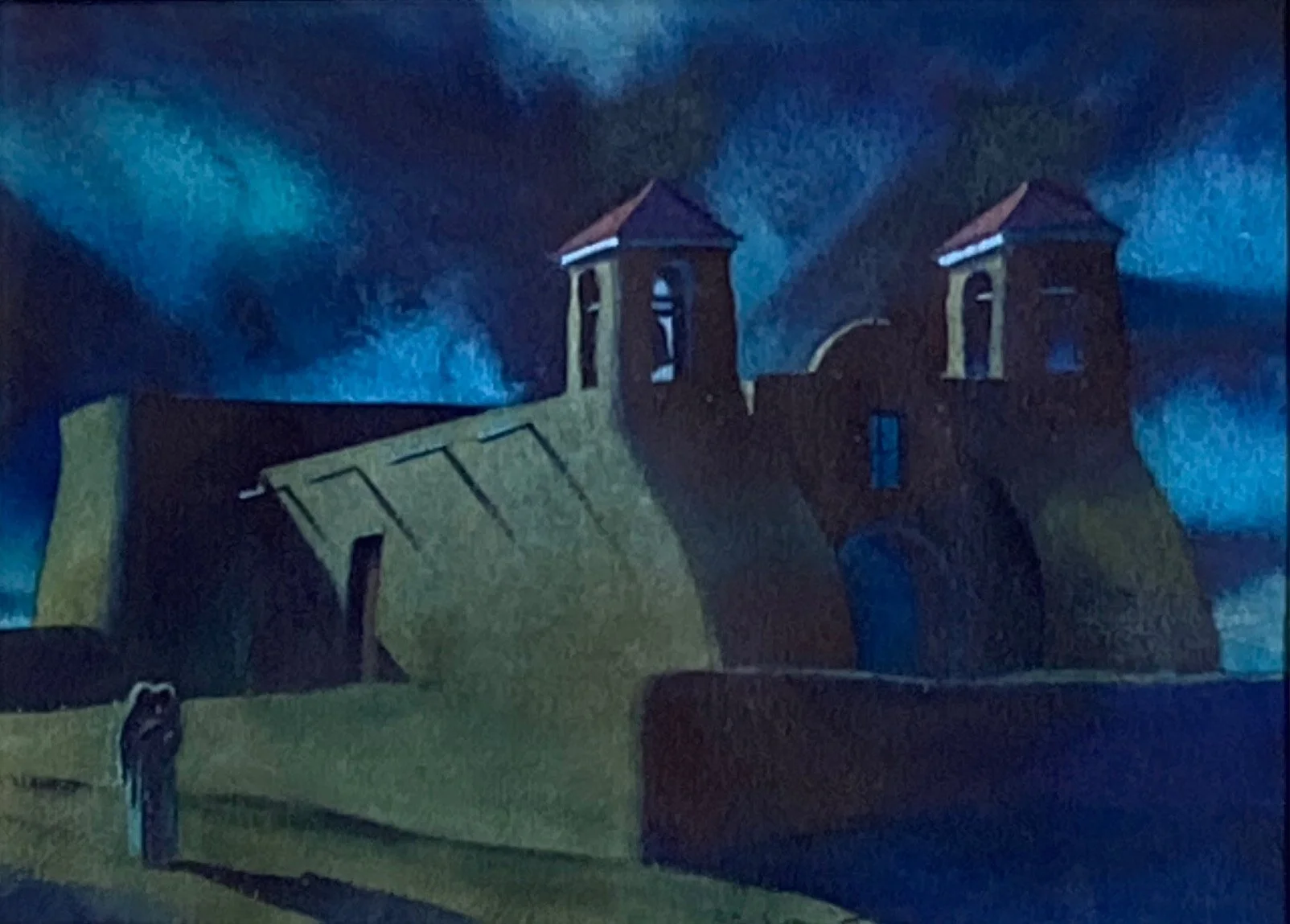
Sandor Bernath - (Untitled) New Mexico Church at Night, watercolor, 12 ¾ x 17 ¾ in.
A master watercolorist, Hungarian-born Sandor Bernath exhibited works at the New York Watercolor Club, the American Watercolor Society, and other notable institutions in the 1920s. In the 1930s, his travels brought him to New Mexico, where the light and landscape inspired new dimensions in his work.